
Workshops
Hands- on Workshops: From practice to precision
SurgX 2025 offers you 8+ high impact surgical workshops ranging from basic suturing to complex surgical skills. Led by trained individuals, these sessions bring you live models, real tools, real practice and real progress. Whether you are just starting out or looking to refine your technique or learn some critical surgical techniques, this is the place for you.
SurgX 2025 is thoughtfully divided into Four sets – A,B,C and D. You will be allowed to choose one set. Each set contains 2 workshops each. .
Pemium workshops : optional add-ons for those with more experience, looking for more advanced simulations, live models and expert led training sessions.
Please Note : The conference will be held on 8th and 9th November. You may attend the conference on either one day—8th or 9th. If you register for premium workshops, they will take place at a separate venue on the other conference day that you are not attending.
Set A- Foundations of Surgical Practice
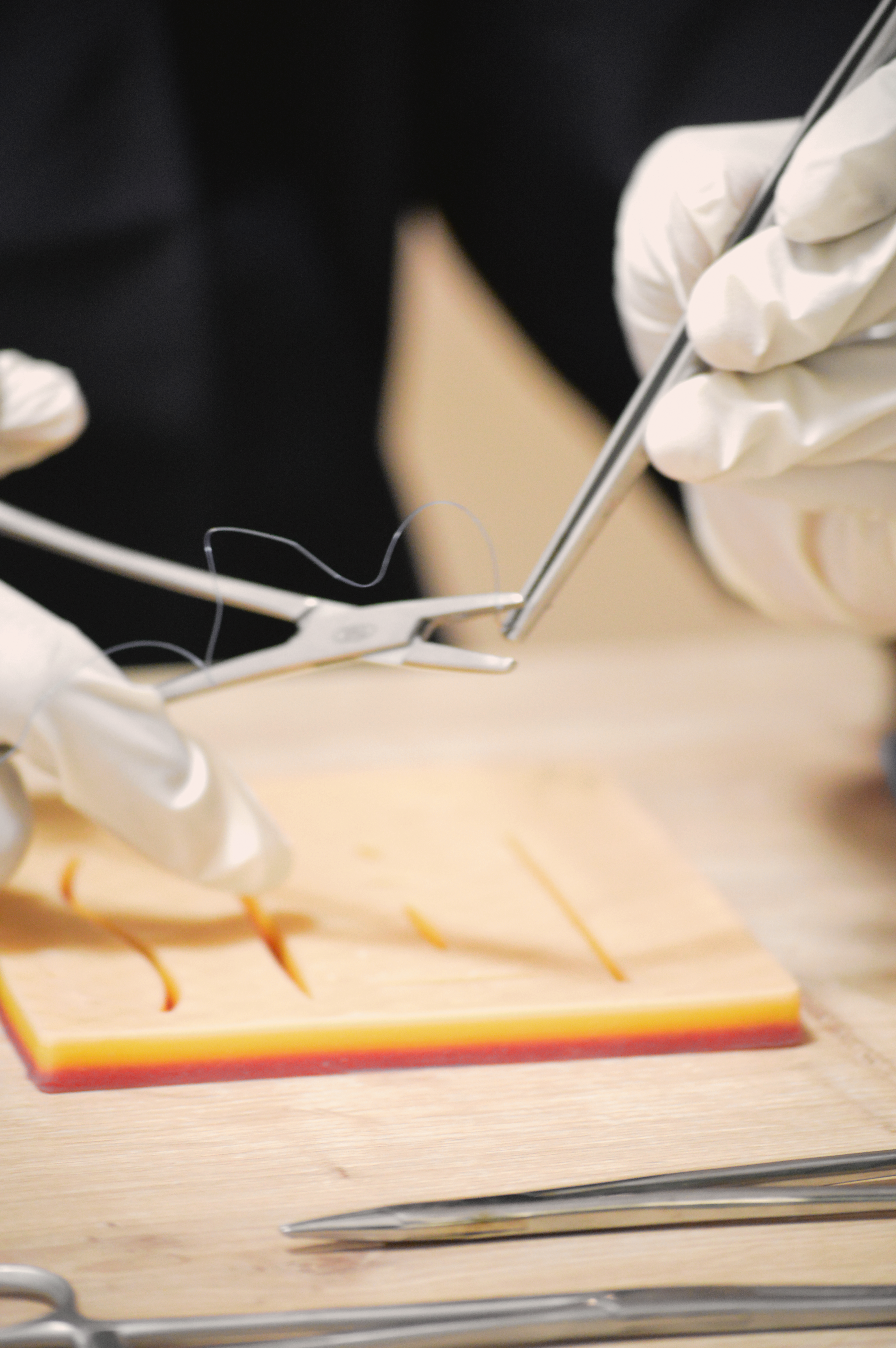
Workshop 1: Fundamentals of Suturing & Knot-Tying
Develop essential wound closure techniques in this foundational workshop. Participants will be introduced to a variety of suture types, knot-tying methods, and safe instrument handling. Structured, hands-on practice will help build both confidence and technical precision — an ideal session for beginners seeking to establish strong surgical fundamentals.
Workshop 2: Principles of Urethral Catheterisation
Gain confidence in performing one of the most common bedside procedures. This workshop covers male and female catheterisation techniques, with emphasis on sterile practice, troubleshooting, and patient communication. Practical training on realistic models ensures participants leave with both clinical understanding and applied skill.
Set B- Core Procedural Training
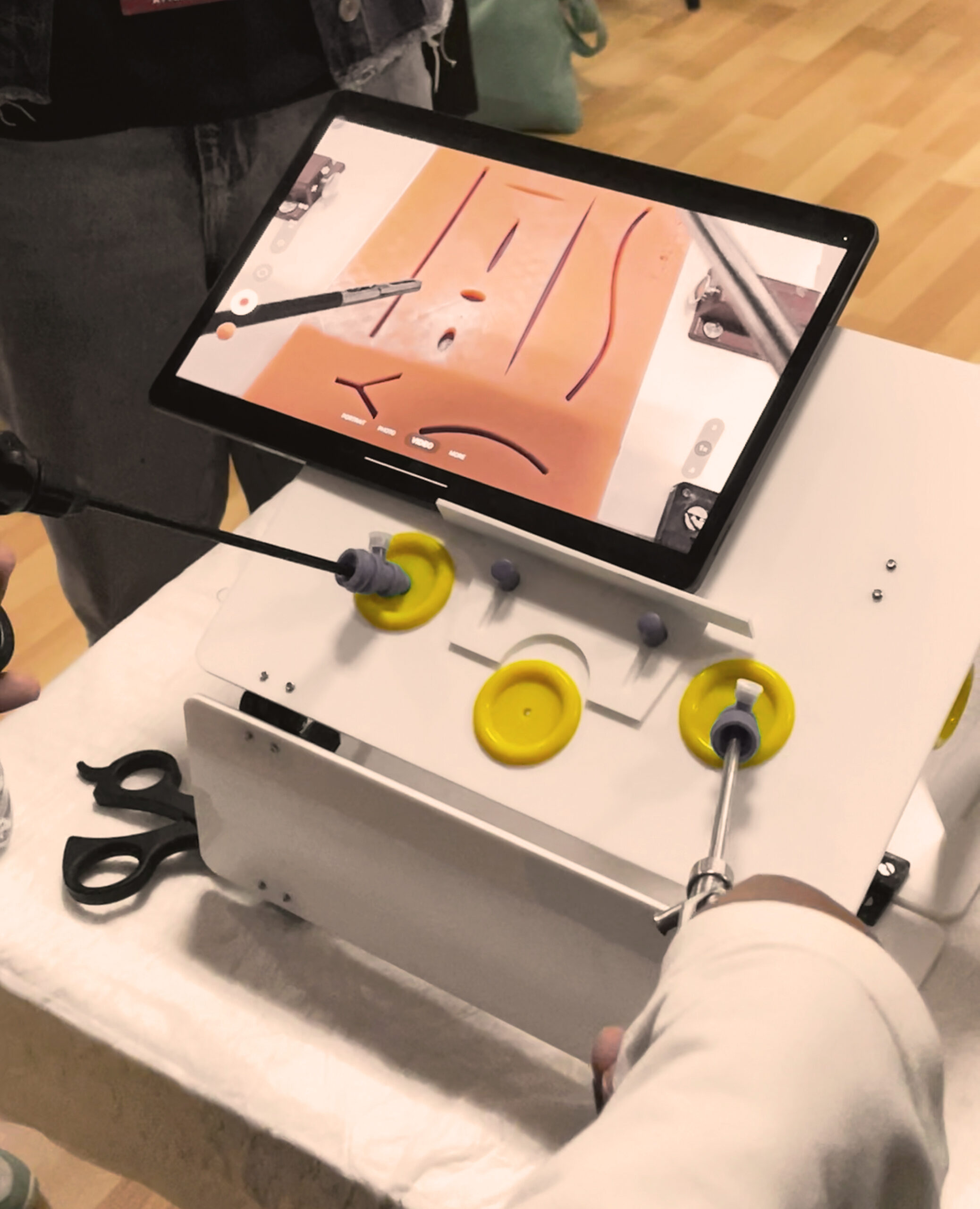
Workshop 3: Fundamentals of Laparoscopic Surgery
Step into the field of minimally invasive surgery with structured training in laparoscopic basics. Participants will practise camera navigation, instrument coordination, and essential hand–eye techniques. Through simulation-based exercises, this session strengthens precision and spatial awareness, serving as a strong entry point for future laparoscopic training.
Workshop 4: Techniques in Tendon Repair
This focused workshop introduces core and epitendinous tendon repair techniques, with zone-specific approaches demonstrated by experienced faculty. Hands-on training emphasises accuracy, tissue handling, and micro-precision — making it an invaluable session for trainees seeking to refine surgical dexterity.
Set C- Speciality focused Skills
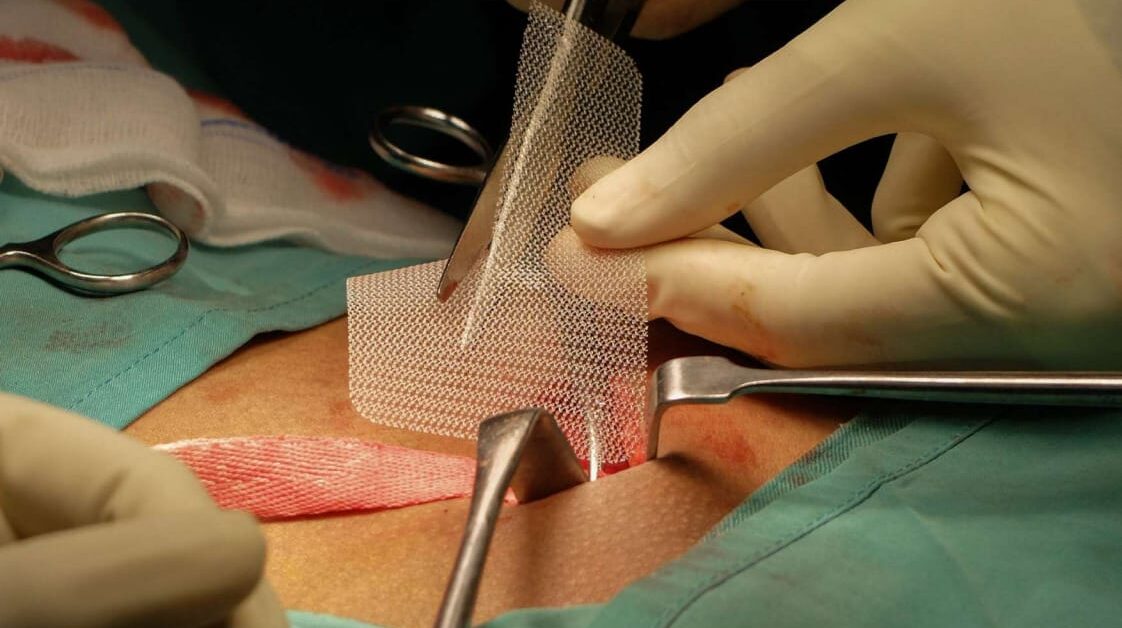
Workshop 5: Techniques in Hernia Repair – GI SURGERY
Learn the essential steps of both open and laparoscopic hernia repair in this practical skills session. Faculty will guide participants through anatomical landmarks, mesh placement strategies, and closure methods. Simulation-based practice ensures participants gain both technical exposure and clinical readiness for real-world hernia repair.
Workshop 6: Principles of Ventriculostomy- CARDIOTHORACIC SURGERY
This simulation-based workshop focuses on ventricular access techniques for neurosurgical emergencies. Participants will learn burr-hole placement, trajectory planning, and catheter insertion under guided supervision. Model-based practice ensures safe, accurate, and confident application of ventriculostomy principles.
Set D- Expert Surgical Skills
Workshop 7: Microsurgical Techniques in Cerebral Vascular Repair
Refine your microsurgical skillset with focused training on cerebral vessel repair. Participants will practise end-to-end, end-to-side, and bypass suturing techniques under magnification. This workshop is designed for neurosurgery trainees aiming to strengthen precision and control in microvascular procedures.
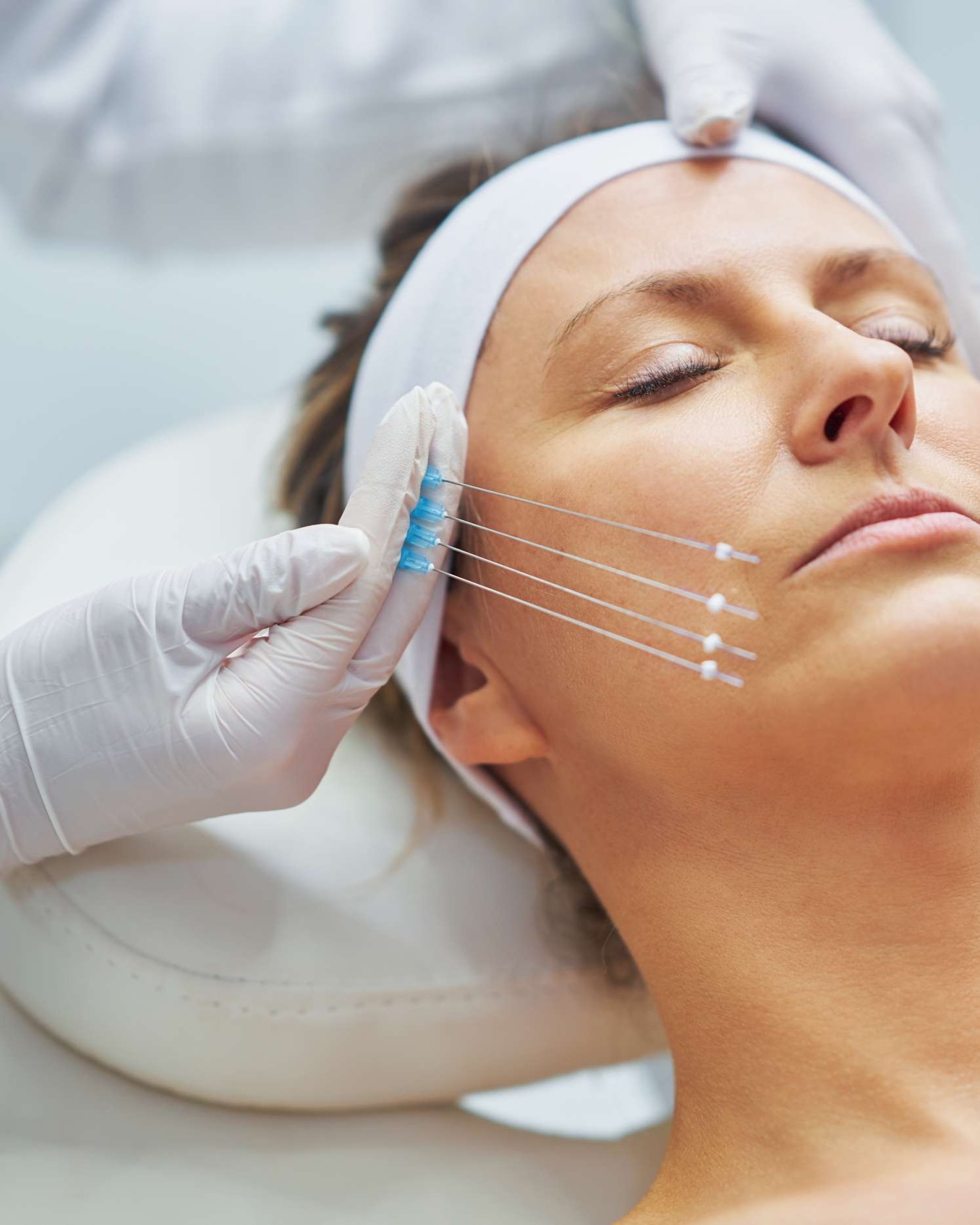
Workshop 8: Principles of Facial Aesthetic Procedures (Injections & Thread Lifting)
An introduction to aesthetic medicine with emphasis on safety and technique. This workshop covers proper methods for filler injection and thread placement, supported by demonstrations and guided practice on models. Participants will develop both technical competence and awareness of complication prevention — suitable for beginners as well as clinicians seeking to broaden their skill set.